If you’re planning to visit Spain for the first time, don’t go anywhere without checking out these Spain travel tips.
Jump to a section of this article
Spain is a relatively uncomplicated country to navigate. Between excellent transport infrastructure, ease of paying by card, a track record for safety, and an agreeable climate, most travelers navigate Spain with minimal issues.
That said, a list of all the Spain travel tips you should be aware of before traveling always comes in handy.
The best way to prepare for your first trip to Spain is by brushing up on cultural norms, such as dining schedules and tipping etiquette. Moreover, adopting Spanish habits and learning a Spanish word or two makes for a culturally immersive vacation.
Complete with the most useful Spain travel tips, this guide covers everything you need to know before your first trip to this gorgeous country in Southwestern Europe.
Quick Reference: Spain
- Currency: Euro (EUR, €)
- Emergency Number: 112
- Plug Types: C, F (230V)
- Time Zones: CET/CEST – mainland; WET/WEST – Canary Islands
- Tap Water: Safe across major cities/mainland
Spain Travel Tips: Essential Guide For First-Time Visitors
Spanish Daily Rhythm, Meal Times & Dining Etiquette
Spain runs to a beat that can feel delightfully rhythmic to overseas visitors. Meals, particularly lunch and dinner, tend to happen later in Spain compared to the United States, the United Kingdom, and several other European countries.
Rather than sticking to your usual schedule in Spain, we recommend you embrace the local pace by falling in tune with long lunches, evening strolls, and limitless conversations.
Daily Meal Schedule in Spain
Most Spaniards start their day with a light breakfast (desayuno) that consists of coffee with toast or pastries, or perhaps pan con tomate.
Many locals then have a mid-morning bite known as almuerzo, or second breakfast, particularly on working days. This usually comes in the form of a bocadillo, which is a heavier sandwich of cold meats, cheese, or Spanish omelette in a crusty baguette.
Lunch (comida) is the main meal of the day in Spain, and lunch time is typically between 2 PM and 4 PM. Many restaurants offer a wallet-friendly menú del día where several courses are available for a fixed price.
An afternoon snack known as merienda ties Spaniards over until dinner. This usually applies to sandwiches, pastries, or churros with hot chocolate or coffee; it may also come in the form of tapas or pintxos with a glass of local wine, beer, or vermouth.
Dinner (cena) is rarely served before 9 PM in Spain, although many locals will eat much later, with meals continuing beyond 11 PM.
In larger Spanish cities and tourist hotspots, some restaurants may open for dinner service as early as 7 PM. However, you may find that most seats are vacant until a more acceptable dining hour for Spanish people approaches.
If you want to eat dinner at an earlier time, check local restaurant opening hours first. Better still, our local experts and trip planners can assist with recommendations when building your custom itinerary.
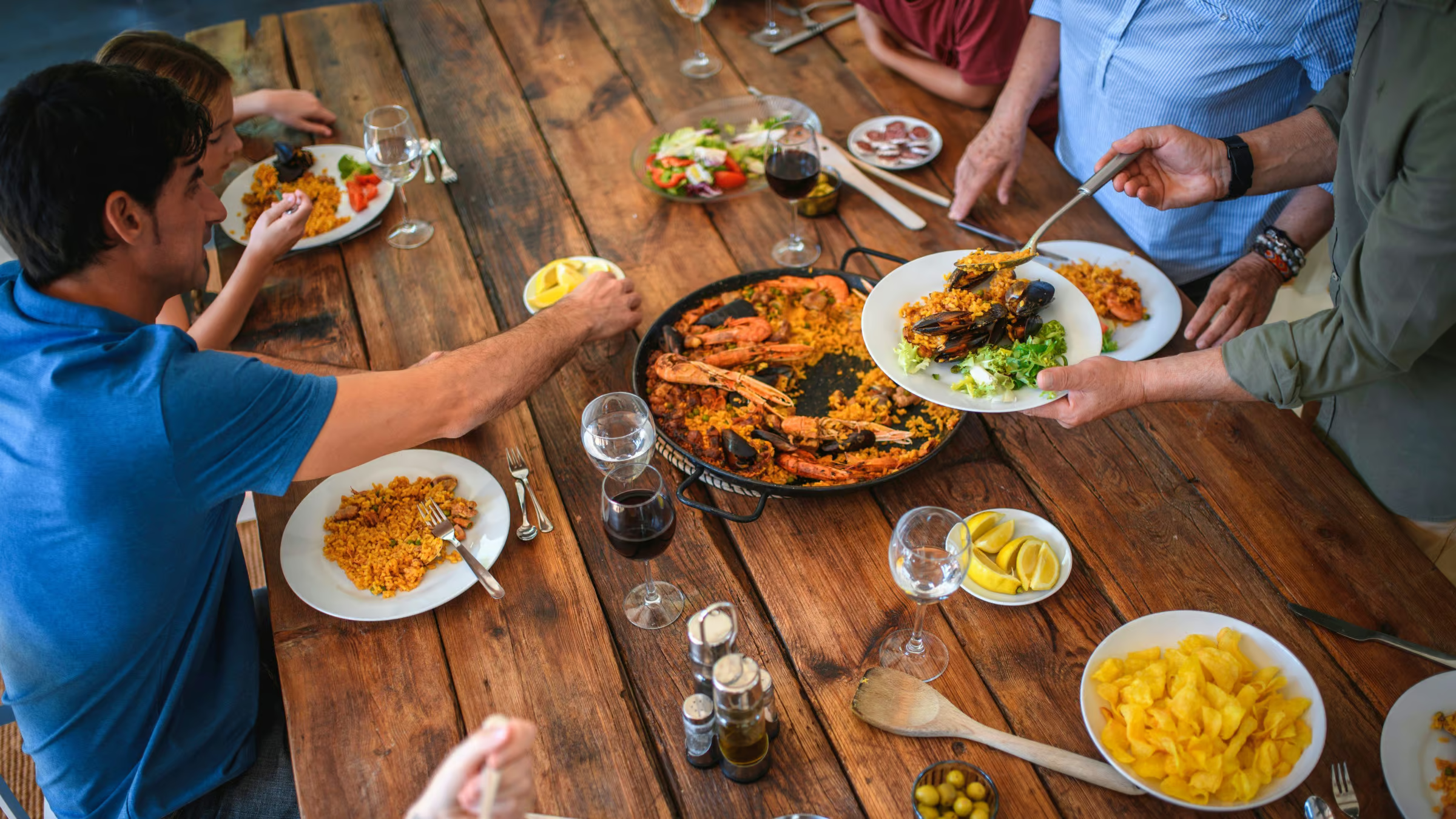
Meals in Spain are social affairs, and they’re not to be rushed. Dining is considered a time to pause and socialize, with sobremesa – the art of lingering at the table after finishing a meal – as central to lunch and dinner as bread, salt, and pepper. Sharing dishes and lingering over refills are part of the experience.
The Siesta Myth Vs. Reality
The idea that all of Spain shuts down every afternoon for a nationwide snooze is a persistent stereotype. While the traditional siesta has played a role in Spanish life historically, particularly in hot rural areas and small towns, modern working patterns mean that most Spaniards do not routinely go home to sleep off a long lunch.
What you may notice is a quieter period in the early afternoon. Some independent shops and businesses, especially in smaller towns, still close for a few hours, often reopening for the evening around 4 PM or 5 PM.
Larger shops, supermarkets, museums, and businesses in popular destinations are more likely to stay open continuously, though.
The climate helps explain this tradition. In the sweltering summer heat, slowing down during the high temperatures of the hottest part of the afternoon makes practical sense.
For travelers, this can be a good moment to take a leisurely lunch, return to your hotel, visit an air-conditioned museum, or simply follow the local lead and take things more slowly. Try to keep your schedule fluid and embrace this Spanish custom.
We recommend not planning your day around the expectation of a siesta, but instead anticipating that an afternoon in Spain may have a different tempo than what you’re used to.
Tapas & Pintxos
Tapas are small dishes or portions of food served throughout Spain. In some places, a small tapa may come for free with your drink, while elsewhere you’ll order and pay for each dish separately.
Depending on the region and restaurant, tapas may come as a handful of olives, slices of tortilla, or more elaborate plates of cheeses, meats, and potatoes.
In cities such as Seville, Granada, and Madrid, going out for tapas often means ordering several dishes to share as a group, but taverns also cater well to solo diners.
Pintxos (also written pinchos) are associated with Northern Spain, especially the Basque Country. These are small bites served on or alongside bread and often held together with a cocktail stick. In San Sebastián and Bilbao, pintxos define the local food culture and are as much a tourist attraction as the landmarks.
At tapas bars, you might order at the counter or by table service; this depends on the establishment. Start with a couple of dishes rather than ordering everything at once; you can always add more. Dishes will arrive when they are ready, and there is no set order on how tapas and pintxos should be consumed.
When ordering pintxos, particularly in a busy bar, watch how the locals do it. Some establishments operate on an honor system, while others keep track of what you’ve taken. Ask the staff how payment works if it isn’t clear.
Table Etiquette in Spain
These Spain travel tips that relate to the country’s table etiquette will help you eat like a local while mastering the art of Spanish tapas culture:
- Sharing: Tapas are designed for sharing, so passing plates around is perfectly normal.
- Bread: Bread is commonly placed on the table upon arrival and added automatically to your bill. If you don’t want to eat bread, inform the server as soon as possible.
- Olive pits and bones: Use the plate provided rather than leaving them directly on the table.
- Coffee: Coffee usually comes after the meal rather than alongside dessert.
- The bill: When you’re ready to pay, ask for “la cuenta, por favor”.
- Tipping: Tipping isn’t obligatory in Spain (more on what to expect below).
- Take your time: A long meal followed by coffee and conversation is the Spanish way.
Keep in mind that Spanish dining culture varies considerably between regions. What feels typical in Barcelona can differ in Galicia, Andalusia, or the Basque Country. That said, one of the greatest pleasures of traveling around Spain is discovering those subtle differences.
Money, Payments & Tipping in Spain
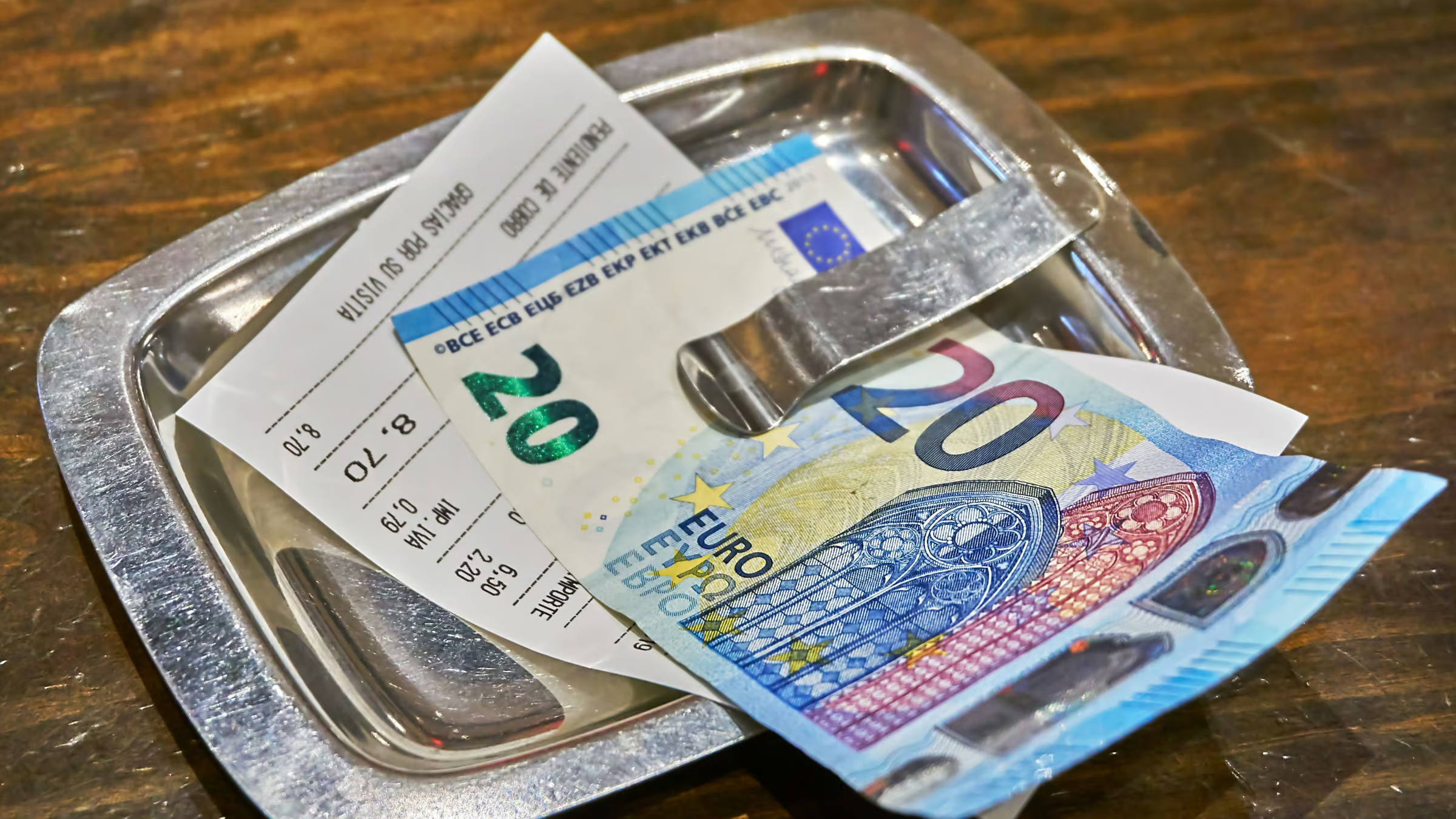
The currency in Spain, including the Balearic Islands and Canary Islands, is the Euro (€).
Cash Vs. Card: What To Expect
Credit cards, debit cards, and contactless payments are widely accepted in Spain, especially at hotels, restaurants, and larger stores. However, every now and then, you might end up in a place that has a minimum amount for cards; always check this before placing an order.
When paying by card, the payment terminal may offer to convert the bill into your home currency: this is known as dynamic currency conversion. Don’t do that. Opting to pay in euros at the local exchange rate usually charges you a more favorable rate.
A small amount of cash comes in useful for markets, smaller cafés, and rural businesses, where you’ll most probably need small change.
You shouldn’t need to exchange a large amount of money before arriving in Spain, although you may wish to bring US dollars to exchange at currency kiosks.
When you do need to withdraw cash, use ATMs (cajeros automáticos) operated by reputable banks. Those attached to a banking establishment are more reliable than standalone machines.
Tipping Etiquette in Spain
One of the most surprising (and, perhaps, welcome) culture shocks for US travelers is related to Spain’s tipping culture: tipping is not compulsory in Spain. Restaurant and café workers are paid living wages (the Salario Mínimo Interprofesional) and do not depend on customers to subsidize their earnings.
That being said, if you’ve received good service, leaving a little extra is always appreciated. You might simply round up a bill or leave any change on the table. Otherwise, you can leave 5–10% as a cash tip in euros, but never leave foreign currency, such as US dollars, as a tip.
There is no need to feel pressured to tip, even if a card machine displays a prompt. Some restaurants do apply a service charge (servicio), in which case there is no need to add a tip. The menu will say whether the service charge is discretionary or mandatory: the latter generally applies to large groups or high-end restaurants.
There is also no need to tip because you’ve been given a tapa. If a complimentary tapa accompanies a drink, it’s part of the establishment’s pricing and serving tradition, not a substitute for a tip.
Tipping taxi drivers and housekeeping staff is similarly discretionary. For excellent service, a modest cash tip is a nice way to show appreciation, but it isn’t an obligation. Tipping tour guides is also discretionary, unless you opt for free walking tours, which are typically tips-based.
Taxes & Service Charges: Understanding Spain’s IVA
The prices displayed to consumers in Spain generally include a value-added tax known as IVA (Impuesto sobre el Valor Añadido). The standard IVA rate is 21%, with reduced rates applying to certain goods and services.
This means the price you see on a restaurant menu or in a shop is the final consumer price, rather than a pre-tax amount.
As referred to above, you may occasionally see a separate service charge (servicio) on a restaurant bill. This is different from IVA and should not be confused with a tip.
If you’re unsure what a charge means, ask the server to explain it before paying. Use a translation tool if there is a language barrier.
Getting Around: Trains, Metro & Regional Transit
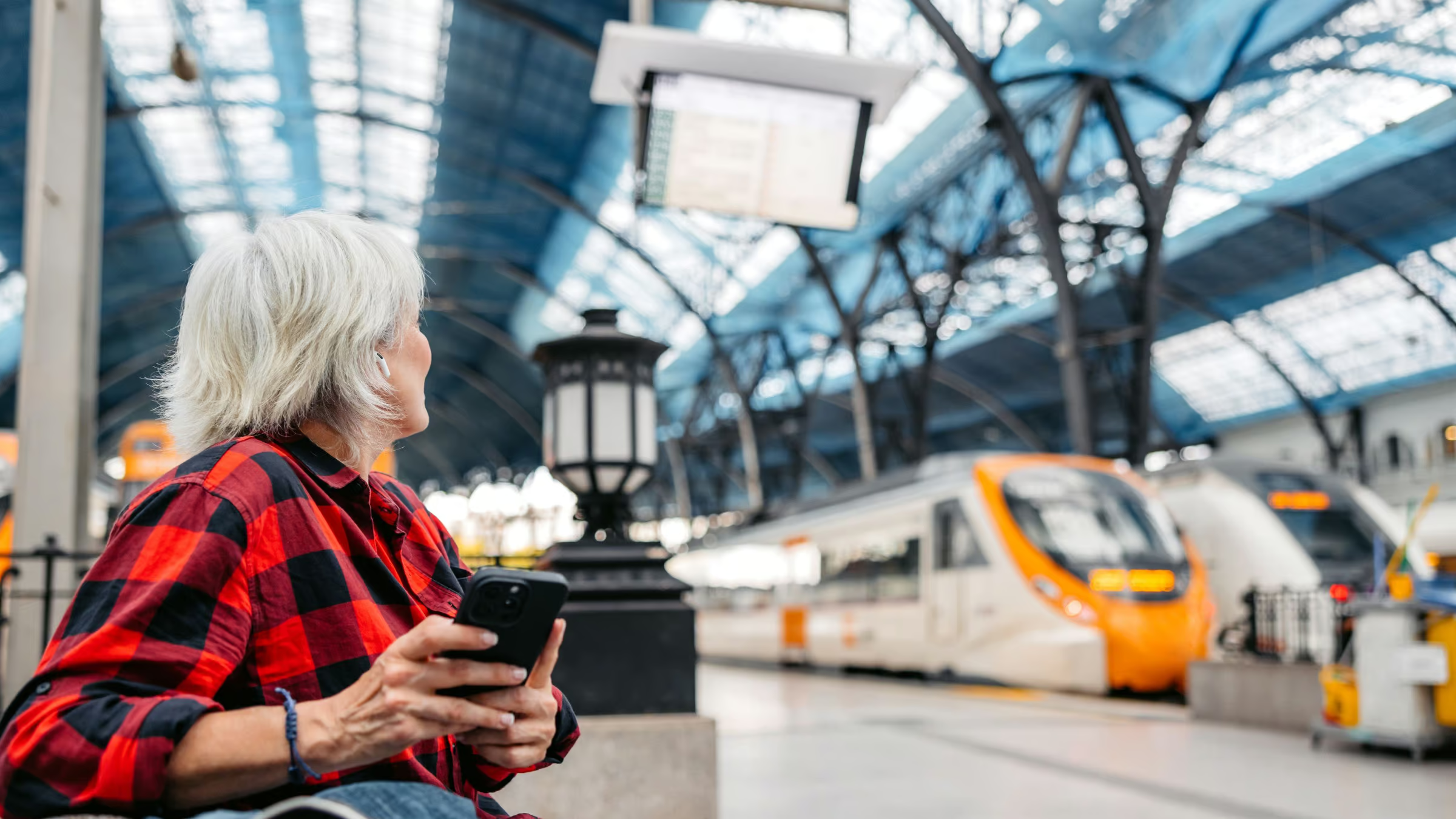
Spain has an excellent public transportation network, making it possible to explore much of the country without renting a car. Between bigger cities, high-speed trains are often the quickest and most comfortable option, while metro subway services, buses, and regional trains make getting around straightforward.
A car rental can be useful for exploring areas, such as northern Spain’s mountains, rural Galicia, or Costa Brava. But don’t assume you need a car for your entire trip; driving in historic city centers can be overwhelming due to narrow streets, restricted-access zones, and limited parking.
For a city-hopping itinerary, taking the train between major destinations and renting a car only for rural sections is often the easiest solution.
We can assist you with booking train tickets, navigating schedules, and car rentals. We also arrange private transfers for those looking to travel in comfort or explore wine regions with a designated driver.
High-Speed Trains
Spain’s high-speed rail network is one of Europe’s most extensive, connecting Madrid, Barcelona, Seville, Valencia, Málaga, Córdoba, Zaragoza, and other large cities. On some routes, journeys that would take five or six hours by car can be completed in around two to three hours.
There are three main operators to choose from:
- AVE, operated by Renfe, is the country’s best-known high-speed service.
- Iryo is a private operator offering high-speed services on principal routes such as Madrid–Barcelona and Madrid–Seville/Málaga.
- Ouigo, the French operator’s Spanish service, is a low-cost option on selected routes.
Tickets may be purchased at the train station and online, where advance fares are often much cheaper. For longer journeys, book trains far in advance. Popular routes can sell out around weekends, holidays, and peak travel periods.
One of our top Spain travel tips is to allow plenty of time for passing through the station; a minimum of 30 minutes before the scheduled departure is sensible.
Luggage is often subject to airport-style screening before entering the departure area for long-distance travel, and platforms can feel like quite a pilgrimage from the arrival area.
Regional Trains & Buses
While larger cities and the corridors between them are well connected, remote mountain villages, wine regions, and coastal spots may require a combination of regional buses and trains, or even a car.
Cercanías networks serve suburbs while regional and media distancia trains connect smaller towns. These all have their own ticketing systems, and it’s important to be clear on the timings for connections.
Some regional transport systems require tickets to be validated before boarding or entering the platform. This isn’t always clear, especially if there are no barriers, so ask the station attendants if you need help and keep an eye on what other travelers are doing.
In places where rail coverage is limited, buses tend to plug the gaps. It isn’t always easy to find details about local and regional services, which is where JayWay Travel can save you a lot of time and hassle.
Renting a Car in Spain & Driving Advice
Renting a car can be a great way to explore Spain’s countryside, mountains, smaller towns and coastal areas, but, as mentioned above, you don’t necessarily need one for a city-to-city itinerary. If you do rent, the requirements are generally straightforward. Most rental companies will require:
- A valid driving licence: You must hold a licence that permits you to drive the type of vehicle you’re renting.
- Passport or national ID: Bring the same identification used when making the booking.
- Credit card: The rental company will require a credit card for the security deposit. Requirements vary, so check before booking.
- Minimum age: The standard minimum is often 21. Young-driver surcharges may apply to drivers under 25.
- International Driving Permit (IDP): Requirements for an IDP depend on where your licence was issued. EU/EEA licences are generally recognized in Spain.
Once you are behind the wheel, these are the most important rules to abide by.
- Drive on the right-hand side of the road.
- Seat belts are compulsory for everyone in the vehicle.
- Children must use appropriate child-restraint systems according to Spanish regulations.
- Speed limits vary depending on the road and location. Typical maximums are 120 km/h on motorways (autopistas/autovías), 90 km/h on conventional roads, and 30 km/h on many urban streets, although posted limits always take precedence.
- Using a handheld cell phone while driving is prohibited, as is driving under the influence of alcohol.
- At roundabouts, traffic already on the roundabout generally has priority, unless signs indicate otherwise.
- You must carry or have access to the legally required vehicle safety equipment; rental cars are normally supplied with all gear.
Language, Cultural Nuances & Regional Identities
Spain is not culturally or linguistically uniform. Each region has its own traditions, food, and festivals, and sometimes a different language. Spanish (Castilian) is the country’s official language and is spoken throughout Spain, but several other languages have official status in their respective regions.
Regional Languages & Cultures
Catalan is widely spoken in Catalonia, the Balearic Islands, and Valencia, where the local variation is known as Valencian. Basque (Euskara) is spoken in the Basque Country and parts of Navarra, while Galician (Galego) is spoken in Galicia.
You will see these languages on road signs, menus, public transport, and official information, often alongside Spanish and, sometimes, English. Don’t worry if you can’t understand them: Spanish will generally be understood, particularly in tourist areas. Learning a few basic Spanish phrases is nevertheless appreciated.
Regional identity can also be deeply important. Catalonia, the Basque region and Galicia, among others, have strong cultural traditions and distinctive histories.
Avoid treating regional identities as simply variations of a single Spanish culture and don’t assume that everyone in Spain identifies with the same national or regional labels.
Food is one of the easiest ways to appreciate these differences. Galicia is known for seafood, the Basque Country for pintxos, Catalonia for dishes such as escudella and pa amb tomàquet, while food in Andalusia in Southern Spain has its traditions of tapas, gazpacho, and fried fish.
Even the familiar national dishes vary considerably from one region to another. A little curiosity goes a long way in Spain: go ahead and ask locals about regional Spanish food, traditions, and language.
Public Holidays (Festivos) in Spain
Besides the main holidays of Christmas and Easter (Semana Santa), Spain’s regional towns and villages host local holidays known as festivos.
Often linked to local saints and feast days, these typically fall in the spring and summer, and they can push accommodation prices up and see trains book out earlier than usual as Spaniards travel to their families.
Once you have your intended dates of travel and destinations in mind, do a quick search for regional holidays that might impact your plans. That said, you may even want to base your itinerary on such events; foreigners are warmly welcomed provided they respect the local culture and customs.
Some of the more famous holidays include Las Fallas (Valencia, March), Feria de Abril (Seville, April/May), La Tomatina (Buñol, August), and Fiestas del Pilar (Zaragoza, October).
Useful Spanish Travel Phrases
It can help to learn some basic Spanish phrases before traveling. This softens communication, shows respect, and is hugely appreciated by service workers. Of course, you might speak in Spanish and then not understand the response. This is where having a translation app on your cell comes in handy.
- Hola: Hello
- Buenos días: Good morning
- Buenas tardes: Good afternoon
- Buenas noches: Good evening/good night
- Por favor: Please
- Gracias: Thank you
- De nada: You’re welcome
- Perdón/Disculpe: Excuse me/Sorry
- ¿Habla inglés?: Do you speak English?
- No hablo español: I don’t speak Spanish
- ¿Puede hablar más despacio?: Can you speak more slowly?
- No entiendo: I don’t understand
- ¿Puede repetirlo?: Can you repeat that?
- ¿Dónde está…?: Where is…?
- ¿Cuánto cuesta?: How much does it cost?
- Quisiera…: I would like…
- La cuenta, por favor: The bill, please
- ¿Se puede pagar con tarjeta?: Can I pay by card?
- Una mesa para dos, por favor: A table for two, please
- ¿A qué hora abre/cierra?: What time does it open/close?
- ¡Salud!: Cheers!
Sunday Closures
Sunday is traditionally a quieter day in Spain, and independent stores, family-run businesses, and smaller restaurants tend to close for the whole day or shorten their opening hours.
Larger shopping centers, supermarkets, and businesses in heavily visited tourist areas are more likely to stay open, although this varies by location.
Sunday is not necessarily a day when everything shuts down, however. Museums, major tourist sites, cafés, bars, and restaurants often remain open, and an outing for Sunday lunch is an important social occasion for many families.
On the other hand, museums often stay closed on Mondays: always check the opening hours when planning your day.
Safety, Health & Practical Essentials
Spain is a very safe destination for travelers, but the usual precautions still apply when exploring cities and stepping out late at night. Petty theft, rather than violent crime, is the biggest concern.
Pickpocketing Precautions
Pickpockets target crowded urban areas, public transport, popular tourist attractions, and busy shopping streets. You don’t need to be overly cautious, but you can avoid making yourself an easy target by following these simple steps:
- Keep your phone and wallet somewhere secure, and never tucked in a back pocket.
- Use a zipped bag and keep it closed in crowded places; crossbody bags are recommended.
- Be attentive when boarding or leaving metro trains and buses.
- Do not leave your phone or wallet on tables at pavement eateries.
- Secure your bag between your legs/under the table when sitting outdoors at busy cafés or terraces.
- Carry a photocopy or secure digital copy of your passport.
Be wary of distraction techniques in crowded places. Be mindful of your possessions if someone spills something nearby or otherwise draws your attention away from your belongings.
If your passport is stolen, report the theft to the police and contact your country’s consulate or embassy for assistance.
Travel Insurance
Travel insurance is a sensible precaution, particularly if your trip includes outdoor activities, multiple destinations, and non-refundable bookings. A good policy should cover:
- Medical expenses, medical evacuation, and repatriation.
- Trip cancellation and interruption.
- Lost, stolen, or delayed baggage.
- Travel delays and missed connections.
- Adventure activities like hiking, skiing, and diving may require additional coverage.
If you intend to hire a vehicle, check what your policy covers and whether you need separate rental car insurance.
Buy insurance when you book your trip rather than just before departure. This means you are covered for any cancellations that may arise between booking and traveling.
Always read the policy’s exclusions and excesses rather than choosing a policy based on the lowest price. Purchasing insurance while already in Spain would usually not be valid.
Pharmacies (Farmacias) & Sun Safety in Spain
Spanish pharmacies (farmacias) are recognizable by their distinctive green cross. Pharmacists can advise on common, minor health concerns and whether you need to see a doctor. Opening hours vary, and some pharmacies operate guardia (on-duty) rotations outside normal hours.
If applicable, bring enough prescription medication for your trip, rather than relying on finding the same medicine in Spain. Carry medication in its original packaging alongside a copy of your prescription or a note from your doctor.
Spain’s sunshine can be deceptively strong, particularly in Andalusia, the Mediterranean, the Canary Islands, and at higher elevations. Use a high-factor sunscreen every day in all seasons, even winter, and apply regular top-ups throughout the day in summer and after swimming or sweating.
You should also wear sunglasses and a hat, drink water and electrolytes regularly, and avoid direct sun during the hottest part of the day. This is particularly important when sightseeing on foot, hiking, or spending time at the beach, and when traveling with younger children and older relatives.
A small medical and health kit is useful, but you don’t need to pack an entire pharmacy. Sunscreen, personal medication, and basic first-aid supplies cover many everyday needs.
It’s useful to carry pain relief medication, antihistamines, and loperamide in case of an unexpected situation, but these standard items are easy to buy. For serious or rapidly worsening symptoms, seek medical care rather than relying on pharmacy advice alone.
Tap Water in Spain
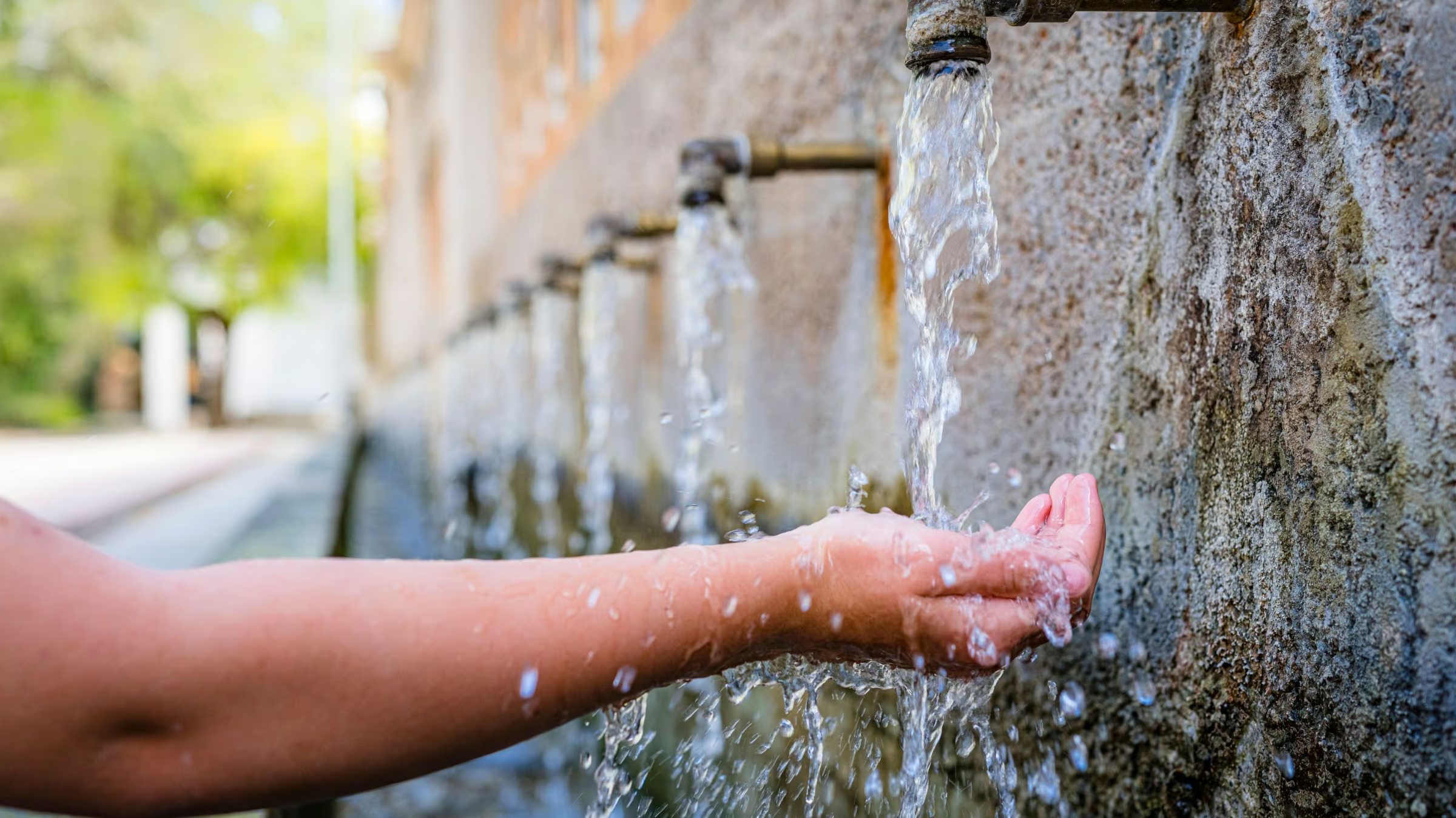
Tap water (agua del grifo) is generally safe to drink throughout Spain, including in Madrid, Barcelona, Seville, Valencia, and coastal resorts.
As Spain has strict standards for drinking-water quality, you can usually fill a reusable bottle (a packing essential) straight from the tap. The main exception is very rural or remote areas, where conditions can vary. If you’re unsure, ask your accommodation to clarify.
The taste can also differ from what you’re used to. In some parts of Spain, particularly areas with harder water, tap water may have a noticeable mineral or chlorine taste. This doesn’t necessarily mean it’s unsafe to drink.
Spain Packing List
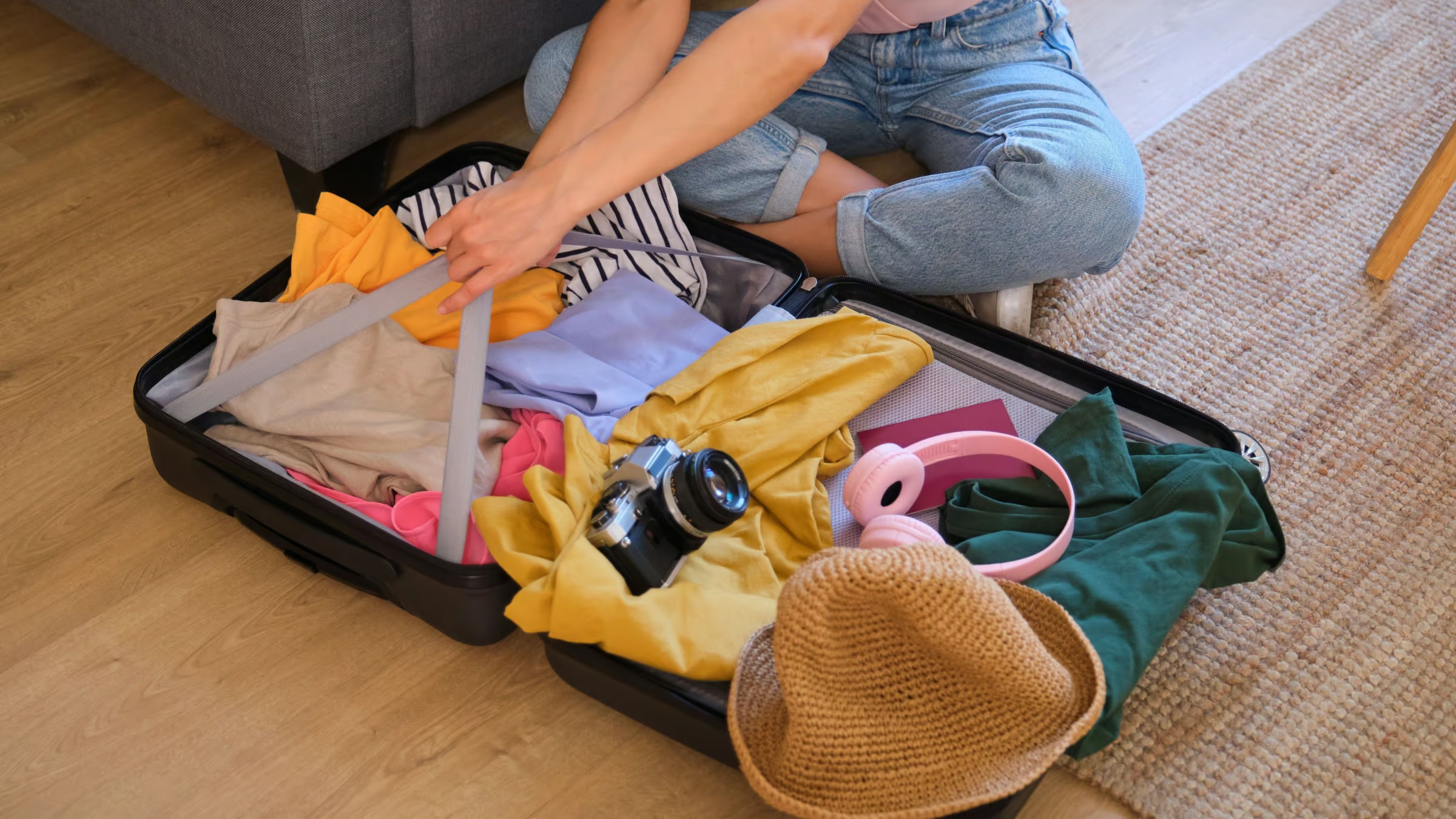
What to pack for Spain depends on the destinations, season, and how you intend to spend your time. As a rule of thumb, these are the essentials for a first-time trip to Spain:
- Light, comfortable clothing. Layers are useful, particularly during the spring and fall months. Most hotels can take care of laundry or can advise a local service.
- Comfortable walking shoes for city exploration, where steps and cobblestones are part of the experience.
- A light jacket or sweater is useful for cooler evenings and air-conditioned trains and restaurants.
- High-factor sunscreen, sunglasses, and a sun hat (even in winter).
- A reusable water bottle.
- A day bag that closes securely in busy tourist areas. Larger backpacks are not permitted in museums and palaces.
- Universal travel adapter. Spain uses European-style Type C and Type F plugs.
- Phone and charging equipment, plus a portable power bank for long sightseeing days.
- Bring enough prescription medication for your trip, in its original packaging.
- Even if you’re not planning a beach vacation, many hotels have pools, so don’t forget a bathing suit.
- Copies of important documents. Keep digital and/or paper copies of your passport, insurance details, and travel bookings separately from the originals.
- Add a warm coat and waterproof layers for winter; breathable clothing and extra sun protection for the summer months; and a light waterproof jacket for spring and fall. If you’re heading into the mountains, pack according to altitude rather than relying on the weather in the nearest city.
Enjoy Spain Without a Worry in The World With JayWay
If it’s your first time visiting the country, reading our list of the best Spain travel tips is the first step for a worry-free trip. However, for a completely seamless travel experience, leave it in our expert hands to craft the perfect Spain itinerary for you, tailored to your needs and preferences.
Whether you want to hit tourist highlights and world-class museums, such as the Royal Palace, La Sagrada Familia, Guggenheim Museum Bilbao, and Museo Reina Sofía, or savor long beach days and mingle with locals on emblematic squares, like Madrid’s Plaza Mayor and Puerta del Sol, get in touch to start planning your dream Spain vacation with us.

Born and raised in Athens, Maria’s passionate about travel and storytelling, a combination that makes her ideal for her role as our content manager.